
The single richest tech YouTuber by most available estimates is Linus Sebastian, whose company, LMG Media, is widely valued at over $100M. Marques Brownlee follows with an estimated personal net worth of $45M to $50M, and Gaurav Chaudhary of Technical Guruji rounds out the top three at approximately $40M to $45M.
The creators at the top of this niche did not build their fortunes through YouTube ads alone. Brand partnerships, affiliate commissions, owned businesses, and product lines account for the majority of wealth at this level, often by a wide margin.
The widely shared claim that YouTube pays $7,000 per million views on tech content is a ceiling estimate rather than a reliable average. Most tech channels earn between $1,200 and $6,000 per million views, depending on audience geography and CPM rates, with the higher end reserved for premium US and UK-focused audiences during peak advertising periods.
Keynotes
- Linus Sebastian's LMG Media, not any single YouTube channel, accounts for the largest fortune on this list, with a valuation estimated above $100M
- The richest tech creators typically earn two to five times more from brand deals than from YouTube ad revenue in any given year
- Several Indian creators rank surprisingly high despite lower regional CPM rates, thanks to massive audiences and active business diversification
- Every net worth figure published for a YouTuber is an estimate, and this article explains exactly how those numbers are constructed so you can read them with appropriate context
- All 25 creators are ranked by estimated total net worth, with a breakdown of the revenue streams that drove each one's wealth
Why Tech Is One Of YouTube's Highest-Paying Niches
The financial advantage of the tech niche starts with the viewer's mindset, not with the creator's production budget. When someone loads a smartphone comparison or a laptop review, they are almost always in the active consideration phase of a purchase. They are about to spend money.
Advertisers are willing to pay significantly more to reach that person than they would to reach someone watching a comedy sketch or a music video, and that structural reality shapes everything about how wealthy tech creators can become.
What CPM Actually Means For A Tech Creator's Monthly Income
CPM stands for cost per mille, which is the rate advertisers pay per 1,000 ad impressions. According to Influencer Marketing Hub benchmarking data, tech channels earn CPMs between $8 and $20 under normal conditions. Premium US and UK-focused tech channels can exceed $20 during Q4, when holiday advertising budgets are at their peak.
A channel generating 10 million views per month at a $12 CPM would gross approximately $120,000 from AdSense. After YouTube's 45% revenue share, the creator takes home around $66,000 per month from ads alone. That is a meaningful income floor, but for the creators at the top of this list, it represents a starting point rather than a ceiling.
The Role Of Brand Deals In Tech Creator Earnings
A single sponsored segment on a top-tier tech channel can generate between $50,000 and $500,000, depending on reach, engagement rate, and advertiser budget. The categories paying the highest rates in the tech space include VPN services, cloud platforms, gaming hardware manufacturers, and flagship smartphone brands.
These companies compete aggressively for placement in front of an audience that purchases frequently and spends heavily. That dynamic gives established tech creators significant leverage when setting sponsorship rates, and it explains why brand deals represent a larger share of top creators' annual income than AdSense does in almost every case on this list.
How These Net Worth Estimates Are Built
Net worth estimates for YouTubers are constructed from a combination of publicly available channel analytics on Social Blade, known CPM benchmarks for the tech niche, observable brand deal activity, company filings where available, and reporting from outlets including Forbes and Business Insider. No creator on this list has publicly disclosed their full personal finances. Several distinctions matter significantly here.
Channel earningsand personal net worth are not the same thing. A creator who grossed $10M over five years may have reinvested heavily in staff and production infrastructure, paid substantial taxes, and distributed funds across multiple asset classes. What circulates online as a "net worth" figure often conflates gross revenue with actual personal wealth. That is why the most reliable tech creator net worth profilesneed to be read as informed estimates rather than exact financial statements.
Regional CPM rates also affect the comparisons on this list. Indian and Southeast Asian creators earn between $0.30 and $2.00 per 1,000 views compared to $8 to $20 for US and UK-focused channels. That context is critical when reading figures for creators like Gaurav Chaudhary, whose wealth derives as much from brand partnerships and business diversification as from raw AdSense output.
With those caveats clearly noted, here are the 25 richest tech YouTubers.
1. Linus Sebastian (LMG Media, Estimated $100M Or More)

Linus Sebastian is in a category of his own on this list. LMG Media, his Vancouver-based operation, is a full-scale media company running LinusTechTips, ShortCircuit, TechLinked, Techquickie, and additional properties with a combined audience exceeding 20 million subscribers across channels.
Beyond the YouTube portfolio, LMG operates Floatplane, a subscription streaming platform that allows paying fans early access to content. The company employs dozens of full-time staff, runs its own merchandise line, and generates revenue from sponsorships, production services, and events in addition to AdSense income.
No other tech creator has built a comparable operational infrastructure. That corporate structure is the primary reason his valuation sits so far above every other creator on this list. His wealth is measured at the company level, not just as a personal creator income.
2. Marques Brownlee / MKBHD (Estimated $45M To $50M)

Marques Brownlee is the gold standard for individual tech creator wealth. His MKBHD channel has over 19 million subscribers and consistently ranks among the most-watched tech channels globally, with production quality that rivals broadcast television on a fraction of the budget.
What separates Brownlee from most creators at his level is the premium tier of his brand partnerships. He works with Samsung, Google, and other flagship tech brands at rates that reflect both his reach and the credibility he has built with a highly discerning audience over more than a decade.
His income flows primarily from brand deals and AdSense, with affiliate commissions adding a secondary stream. Unlike Linus Sebastian, he has not built a major standalone company, which is why his estimated net worth, though enormous, sits below LMG Media's valuation.
3. Gaurav Chaudhary / Technical Guruji (Estimated $40M To $45M)

Gaurav Chaudhary built the most successful Hindi-language tech channel in YouTube history. Technical Guruji has over 23 million subscribers and billions of career views, built on the premise of making technology genuinely accessible to Indian audiences in their own language.
His wealth comes from several sources working together. While Indian CPM rates are lower than Western markets, the scale of his audience generates meaningful AdSense income in aggregate. More significantly, he has secured brand deals with major global tech companies, developed merchandise lines, and built media partnerships, including a collaboration with NDTV for Gadgets 360.
Chaudhary holds investments in real estate and other ventures outside YouTube, which contribute meaningfully to why his total estimated net worth ranks him third on this list despite the CPM disadvantage.
4. Lewis Hilsenteger / Unbox Therapy (Estimated $35M To $40M)

Lewis Hilsenteger turned the simple concept of opening boxes on camera into one of the most-watched tech properties on the platform. Unbox Therapy has over 24 million subscribers and more than 4.7 billion career views, figures that place it at the top of the tech YouTube hierarchy by raw reach.
His business model is anchored by sustained, long-running brand partnerships with major consumer tech companies, supplemented by strong AdSense income from consistently high view counts. Hilsenteger has kept his operation relatively lean compared to LMG Media, which means a higher proportion of gross revenue converts into personal wealth rather than operational overhead.
His estimated net worth of $35M to $40M reflects years of compounding brand deal income on top of a channel that has remained one of the most subscribed in the tech category.
5. Mark Rober (Estimated $20M To $25M)

Mark Rober spent nine years as a NASA engineer before becoming one of YouTube's most viral science and technology creators. His channel has over 57 million subscribers, the largest raw subscriber count on this list, but his low posting frequency limits the monthly AdSense output that subscriber count would normally generate.
What places Rober in the top five is CrunchLabs, the STEM subscription box company he co-founded. CrunchLabs sells monthly educational science kits for children and has grown into a meaningful recurring revenue business with its own customer base, independent of its YouTube channel's performance.
That company asset, combined with premium brand deal rates earned by a creator with tens of millions of highly engaged subscribers, and AdSense from billions of career views, pushes his estimated net worth into the $20M to $25M range.
6. Arun Maini / MrWhoseTheBoss (Estimated $8M To $12M)

Arun Maini built one of the UK's most-watched tech channels starting from his university dormitory while studying economics at Warwick. MrWhoseTheBoss now has nearly 20 million subscribers and covers smartphone comparisons, tech news, and gadget reviews with a production quality that rivals much larger operations.
His income is driven by brand deals with major phone manufacturers, AdSense revenue from a highly engaged global audience, and affiliate commissions. The UK advertising market commands premium CPM rates, which adds meaningfully to his per-view earnings compared to creators whose audiences are concentrated in lower-CPM regions.
His trajectory also suggests his net worth will continue rising. He remains one of the fastest-growing channels in the tech category among creators who have already crossed the 10 million subscriber mark.
7. Zack Nelson / JerryRigEverything (Estimated $5M To $10M)
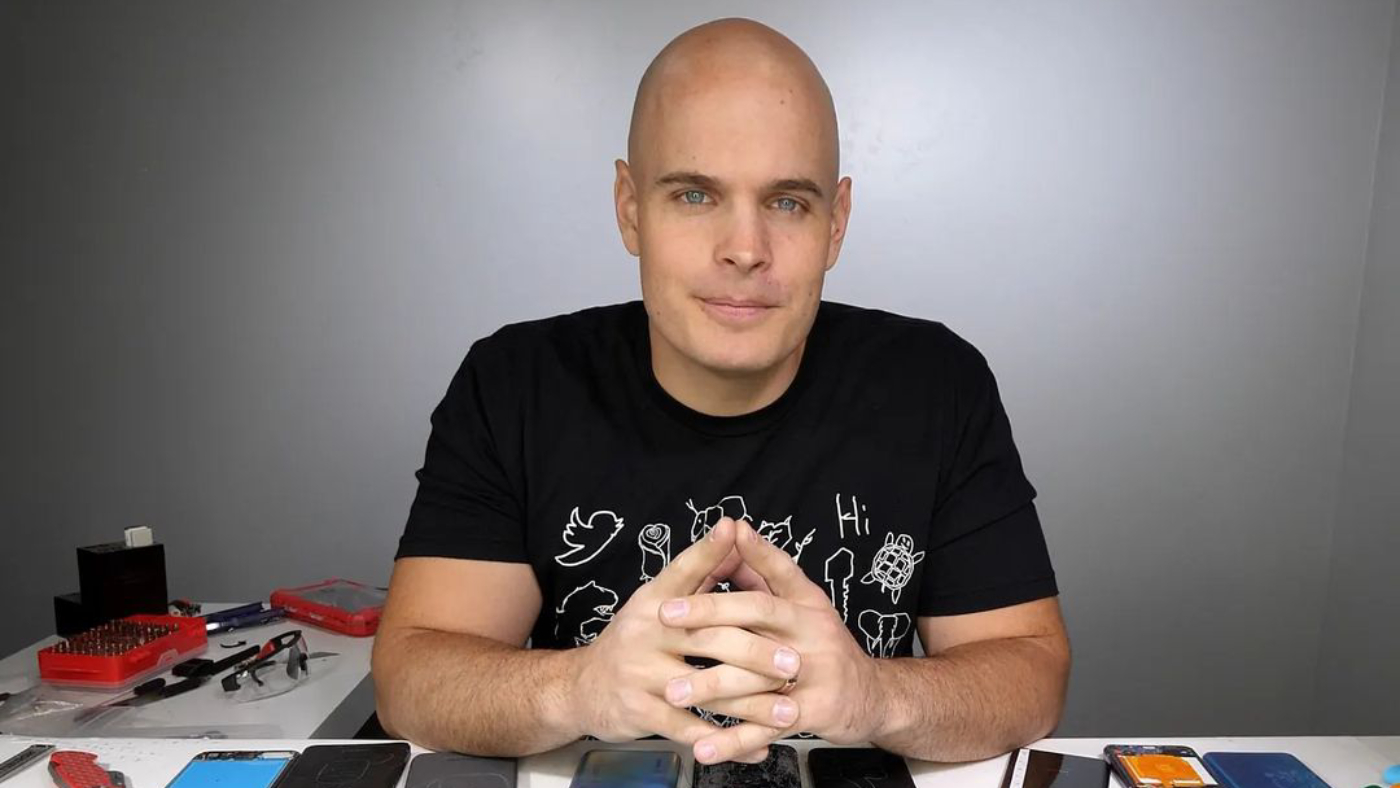
Zack Nelson carved out a defensible and unique position in tech YouTube by focusing entirely on hardware durability testing. His teardown and scratch test format has earned him over 8 million subscribers and cemented his reputation as the definitive authority on build quality for smartphones and consumer devices.
His business model benefits strongly from affiliate commissions. Viewers engaging with durability content are almost always close to a purchase decision, which means affiliate links for the products he tests convert at above-average rates. Direct brand deals with phone manufacturers and accessories companies add a second substantial income layer that operates independently of AdSense.
8. Austin Evans (Estimated $5M To $8M)

Austin Evans operates with a full production team, including editors, producers, and cinematographers, giving his channel a broadcast-quality presentation that attracts premium sponsorship rates. His content spans smartphone reviews, gaming hardware, and budget tech comparisons, which broadens his advertiser pool compared to creators with a narrower content focus.
Evans has been consistently active for over a decade, meaning his income benefits from years of compounding brand relationships and a well-established affiliate revenue stream. His gaming crossover content also provides access to advertisers in two of YouTube's higher-CPM categories simultaneously, a structural advantage that amplifies his total earnings.
9. Justine Ezarik / IJustine (Estimated $4M To $6M)

Justine Ezarik is one of the longest-tenured creators in the tech YouTube space, with an active career spanning nearly two decades. Her channel has over 7 million subscribers and covers Apple product reviews, unboxing content, and tech lifestyle content with an accessible, personality-driven format.
Her wealth benefits from longevity as much as scale. Years of consistent brand partnerships, affiliate commissions from Apple-adjacent products, acting work, and public speaking engagements have built a net worth that reflects a multi-decade career trajectory rather than any single peak moment. In a niche where many creators burn out or fade, her sustained relevance is itself a significant financial asset.
10. Dave Lee / Dave2D (Estimated $3M To $5M)

Dave Lee built his channel on the premise that minimal production and maximum clarity beat high-budget noise. His laptop and smartphone reviews are among the most trusted in the space, and his audience engages at above-average rates because of the reliability and consistency of his assessments over many years.
Strong affiliate commission income from laptop and tech purchases, combined with selective brand deals and steady AdSense revenue, places his estimated net worth in the $3M to $5M range. His channel attracts viewers who are actively close to making a purchase, which keeps his affiliate conversion rates strong well after individual videos are published.
Read Also: Smarter Ways To Shop For Electronics
11. Destin Sandlin / Smarter Every Day (Estimated $3M To $5M)

Destin Sandlin's channel sits at the intersection of technology and science education, with over 11 million subscribers drawn to content ranging from space exploration to ballistics physics. His audience composition drives premium CPM rates because his viewers skew highly educated with above-average household incomes.
Smarter Every Day generates income through AdSense, brand partnerships with scientifically credible companies, a Patreon community, and merchandise. Sandlin's background as an aerospace engineer gives him authentic authority in his subject matter, which in turn attracts credible brand partnerships in defense, science, and technology sectors that are not typically available to review-format channels.
12. Taras Maksimuk / TechRax (Estimated $3M To $5M)

Taras Maksimuk built a dedicated audience of over 7.5 million subscribers through extreme smartphone durability testing, most famously with iPhones. Drop tests, water submersion experiments, and creative destruction content deliver consistently strong view counts and high rewatch rates.
His income comes primarily from AdSense, which benefits from the entertainment rewatch value of his format, and from brand deals with phone case and accessories manufacturers whose products are directly relevant to his durability-focused audience. His channel has maintained steady output over many years, giving him a cumulative view base that generates meaningful passive AdSense income.
13. Judner Aura / UrAvgConsumer (Estimated $2M To $5M)

Judner Aura built his channel around a positioning that resonates particularly well with younger and budget-conscious audiences: honest assessments of technology that most people can actually afford. With over 3.25 million subscribers, his engagement rates are strong because his recommendations feel grounded and trustworthy rather than aspirational.
His income comes from AdSense, affiliate commissions on mid-market and budget tech products, and brand deals with companies targeting value-conscious consumers. The affiliate portion of his revenue benefits from the fact that budget tech buyers are highly motivated to click and convert when a creator they trust makes a specific recommendation.
14. Manoj Saru / Technology Gyan (Estimated $2M To $5M)

Manoj Saru's Technology Gyan has over 13 million subscribers and focuses on tech comparisons and unboxing for a Hindi-language audience in India. His content strategy targets the value-oriented Indian consumer, which drives strong engagement and watch times even within a lower-CPM environment.
His revenue includes AdSense from a large and growing subscriber base, brand deals with Indian and global consumer tech companies, and merchandise. Like Gaurav Chaudhary, his path to wealth has run through volume and brand partnerships rather than premium per-view rates, and his estimated net worth reflects consistent output over many years of channel growth.
15. Jonathan Morrison (Estimated $2M To $4M)

Jonathan Morrison's channel blends cinematic production with technically substantive reviews, focusing primarily on Apple products and consumer lifestyle tech. With over 2.5 million subscribers, he has built a loyal audience that responds strongly to his aesthetic approach and the depth of his product assessments.
His income flows from Apple-adjacent brand deals, AdSense, and affiliate commissions on premium tech hardware. His production quality positions him favorably when negotiating sponsorship rates, allowing him to command deals above what his subscriber count alone might suggest. His channel's design-conscious identity also attracts software and creative tool sponsors that are not typically available to straightforward review channels.
16. Michael Fisher / MrMobile (Estimated $2M To $4M)

Michael Fisher differentiates himself through a storytelling-driven approach to tech reviews, treating each product as a narrative experience rather than a specification exercise. His MrMobile channel has approximately 1.25 million subscribers, which is smaller than most creators on this list, but his engagement rates and content prestige generate brand deal rates that outperform his raw subscriber count.
Fisher's income comes from AdSense, sponsored content from premium mobile manufacturers, and his work as a technology journalist across multiple platforms and publications. His net worth reflects sustained high-quality output over many years rather than mass-scale reach, and his reputation in the industry gives him access to early product access and partnership opportunities that are difficult to replicate.
17. Shlok Srivastava / Tech Burner (Estimated $2M To $4M)

Shlok Srivastava is one of India's most popular tech YouTubers among younger audiences, with over 12 million subscribers who respond strongly to his blend of tech reviews and comedic content. His dual appeal to both tech enthusiasts and entertainment-oriented viewers gives him access to a wider advertiser pool than pure-review channels typically reach.
His revenue comes from AdSense, brand deals with gaming and mobile companies, merchandise, and affiliate partnerships. The entertainment element in his content also opens sponsorship opportunities outside the traditional tech category, including gaming, lifestyle, and consumer goods brands that pay to reach his young, engaged demographic.
18. Amit Sharma / Crazy XYZ (Estimated $2M To $4M)

Amit Sharma's Crazy XYZ has over 31 million subscribers, one of the largest raw subscriber bases on this entire list. His content focuses on DIY experiments, science challenges, and gadget-focused stunts that drive enormous view counts and very strong audience retention metrics.
His primarily Indian audience means CPM rates are significantly lower than for Western channels with similar subscriber numbers, which is why his estimated net worth of $2M to $4M sits far below where his subscriber count might suggest. His wealth reflects strong AdSense volume at lower per-view rates, brand deals with Indian consumer brands, and merchandise, building to a meaningful fortune even within a lower-CPM environment.
19. Sara Dietschy (Estimated $1M To $3M)

Sara Dietschy covers creative technology, focusing on the tools and workflows used by content creators, designers, and freelancers. Her channel has around 750,000 subscribers, a number that undersells her commercial value because her audience is unusually valuable from an advertiser's perspective.
Creative professionals and freelancers purchase software subscriptions, hardware peripherals, and productivity tools regularly and at above-average price points. That audience composition commands premium brand deals with software companies and creative hardware manufacturers that are not available to generalist tech channels. Her income also includes consulting work and affiliate commissions from high-value software referrals.
20. Dilraj Singh Rawat / Mr. Indian Hacker (Estimated $2M To $4M)

Dilraj Singh Rawat runs one of the largest experiment and life hack channels on YouTube, with over 42 million subscribers, making it one of the most-subscribed properties on this entire list. His content blends gadget experiments, life hacks, and high-energy stunts that appeal broadly to younger Indian audiences.
His massive audience generates substantial AdSense income even at lower Indian CPM rates, and his channel's broad appeal to youth-oriented consumer brands makes him attractive to a wide range of sponsors. His estimated net worth reflects AdSense volume from billions of views, brand deal income, and merchandise, building to a meaningful figure despite the per-view rate disadvantage.
21. Quinn Nelson / Snazzy Labs (Estimated $1M To $3M)

Quinn Nelson's Snazzy Labs channel focuses almost exclusively on Apple products and macOS workflows, which attracts one of the most commercially valuable demographic profiles on YouTube. Apple users statistically have higher incomes and stronger purchasing power than the general platform average, and advertisers pay a meaningful premium to reach them.
His income benefits from premium AdSense rates driven by audience composition rather than raw size, selective brand deals with software and productivity companies, and affiliate commissions from Apple hardware and accessories. His per-view revenue significantly outperforms what his subscriber count alone would suggest, which is the defining characteristic of a well-positioned niche channel.
22. Beebom (Estimated $2M To $5M)

Beebom operates more as a tech media brand than a personality-driven creator channel, covering gadgets, software tips, and tech news across both a YouTube channel and a companion tech journalism website. With around 3 million YouTube subscribers and significant web traffic to the Beebom website, the brand generates revenue across multiple digital properties simultaneously.
Income flows from AdSense on YouTube, website display advertising, affiliate marketing across both platforms, and brand partnerships with tech companies. The combination of a high-traffic website and a YouTube channel gives Beebom significantly more advertising inventory and affiliate surface area than a channel-only operation of comparable audience size.
23. Matthew Moniz (Estimated $1M To $2M)

Matthew Moniz built a loyal following around smartphone and laptop reviews with a consistent focus on devices that mid-market buyers actually consider purchasing. His channel has over 1 million subscribers and generates solid affiliate commissions from viewers who follow through on the purchases he evaluates.
His income structure relies on AdSense, Amazon, and direct retailer affiliate links, and occasional brand partnerships. His production quality relative to channel size and his reputation for reliable assessments keep audience trust high and affiliate conversion rates above average for a channel in his tier.
24. Max Yuryev / Max Tech (Estimated $500K To $1.5M)

Max Tech specializes in Apple Silicon performance benchmarking and Mac-focused reviews, a niche that commands premium CPM rates because of the affluent demographic it consistently attracts. His channel has around 550,000 subscribers but earns per-view rates well above the tech channel average because of who is watching.
Income comes from premium AdSense, affiliate commissions on Mac hardware and accessories, and brand deals with Apple ecosystem companies, including software developers and peripheral manufacturers. His technical focus and the precision of his benchmarking content give him credibility that translates into sustained brand relationship value.
25. Gary Sims / Gary Explains (Estimated $500K To $1.5M)

Gary Sims built Gary Explains around demystifying complex technology concepts for everyday users, covering processors, operating systems, and the technical fundamentals that most mainstream tech channels skip over. His global audience, with a strong UK and European base, earns above-average CPM rates for a channel of his size.
His income comes from AdSense, brand partnerships with tech education companies and software developers, and affiliate commissions. His authoritative explainer positioning within the tech niche gives him access to sponsorships from companies whose products benefit from informed consumer understanding, a category that includes developer tools, security software, and technical training platforms.
How The Richest Tech YouTubers Actually Make Their Money
Looking across this entire list, several revenue patterns emerge clearly.
AdSense And The YouTube Partner Program
YouTube's Partner Programpays creators a share of ad revenue generated on their videos. For tech channels, the CPM range of $8 to $20 is substantially higher than the YouTube platform average of $2 to $5, according to Influencer Marketing Hub. That structural gap creates a meaningful income floor for tech creators that simply does not exist in lower-CPM categories.
The key variable within tech is audience geography. A channel with 5 million subscribers primarily in the US or UK will earn dramatically more from the same view count than a channel with 10 million subscribers based predominantly in India or Southeast Asia. This is why Gaurav Chaudhary's net worth, though impressive and placing him third overall, sits below MKBHD's despite a comparable subscriber base.
Brand Deals And Sponsored Segments
Brand deals are the primary wealth driver for most creators in the top ten. The rates available to established tech YouTubers reflect both their reach and the purchase intent of their specific audience.
The categories most active in tech YouTube sponsorships include VPN services, cloud storage platforms, gaming hardware, smartphone manufacturers, and productivity software. These advertisers do not work with every channel.
They target creators with proven engagement, established credibility, and audiences that match their ideal customer profile, which means the creators who invested in building genuine trust over the years are rewarded with rates that newer channels at similar subscriber counts cannot access.
Affiliate Marketing And Product Links
Affiliate income is a quieter but substantial revenue stream for many creators on this list. When a tech channel reviews a laptop or smartphone and links to it through an affiliate program, they earn a commission on every resulting purchase, often long after the video was first published.
For channels focused on purchase-decision content, conversion rates are high. A single well-placed review with an affiliate link can generate thousands of dollars in passive commissions from one video over its lifetime. Amazon's affiliate program is the most common entry point, but established creators often negotiate direct arrangements with manufacturers and retailers at commission rates significantly higher than Amazon's standard tiers.
Merchandise, Products, And Owned Businesses
The clearest gap between a creator worth $5M and one worth $50M often comes down to whether they built something they own outright. LMG Media and Floatplane represent the most complete version of this model. CrunchLabs for Mark Rober represents another path, building a product business that generates revenue independent of any individual video's performance.
Merchandise is a smaller but consistent revenue stream for creators with strong audience loyalty. For channels with audiences above 10 million subscribers, a well-executed merchandise line can generate hundreds of thousands of dollars annually with relatively manageable overhead.
Does YouTube Pay $7,000 For 1 Million Views On Tech Channels?
The $7,000 per million views estimate sits at the high end of what premium tech channels can earn from AdSense under optimal conditions. It assumes a CPM above $14, a strong ad click-through rate, and an audience that is predominantly located in high-CPM markets like the US, UK, Canada, and Australia.
For most tech channels, the realistic range runs between $1,200 and $6,000 per million views. A channel with strong US demographics and high watch times might reach $5,000 to $7,000 during Q4 when advertising budgets peak. A channel with a large Indian or Southeast Asian audience might earn $400 to $1,500 per million views despite impressive raw view totals.
The $7,000 figure is technically achievable for the right channel at the right time of year. It is not a standard expectation, and treating it as one would lead most creators to significantly overestimate their potential AdSense income.
What Separates The Wealthiest Tech Creators From The Rest
Looking across the full list, several patterns appear consistently among the creators who crossed the $10M threshold. They diversified early and deliberately. The richest creators did not wait for their channels to plateau before building other income sources. Brand deals, affiliate programs, and external ventures were developed alongside channel growth, not as a reaction to it slowing down.
They built audience trust as a standalone asset. The tech audience is skeptical and commercially sophisticated in a way that many other YouTube demographics are not. Creators who prioritized honest, substantive content over promotional-feeling reviews built credibility that compounds over time. That credibility translates directly into higher brand deal rates and stronger affiliate conversions, year after year.
They also made the mindset shift from channel owner to business builder. For Linus Sebastian, LinusTechTips was the foundation on which a media company was built. For Mark Rober, his channel was the audience acquisition engine for a subscription product business. The channel was always a means, not the result. That distinction in approach, more than any single tactic or trend, is what separates the top tier from the rest of a competitive field.
Frequently Asked Questions
Can A Tech YouTuber Become Profitable Without Reaching 1 Million Subscribers?
Yes, though the approach looks different. A focused tech channel with a highly targeted audience in a premium niche, such as enterprise software, professional hardware, or developer tools, can generate substantial income through affiliate commissions and niche sponsorships well before hitting 1 million subscribers.
What Makes The Tech Niche More Profitable Than Gaming Or Entertainment On YouTube?
The core factor is viewer purchase intent. Tech viewers are actively researching expensive products, which drives higher advertiser CPM bids and stronger affiliate link conversion rates. Gaming and entertainment audiences are larger in total volume but have lower per-viewer commercial value because they are typically consuming for entertainment rather than making imminent purchase decisions.
Do Tech YouTubers Pay Taxes On Brand Deal Income?
Brand deal payments are classified as self-employment income in most jurisdictions and are subject to standard income tax rates. Most professional creators operate through a registered business entity to manage tax obligations, allowable deductions for production expenses, and liability. Tax treatment varies by country, so creators typically work with accountants experienced in digital media income.
Final Thoughts
The creators on this list did not build their fortunes by accident or through a single viral moment. Each one made deliberate decisions, often over a decade or longer, about which revenue streams to develop, which audiences to build trust with, and when to look beyond the YouTube channel itself.
The tech niche's structural advantage, high CPM rates, premium brand partners, and purchase-intent audiences created the conditions for this level of wealth accumulation. But the conditions alone were never enough. The creators who turned those conditions into eight and nine-figure outcomes were the ones who treated their audience's trust as a long-term asset and built businesses on top of it, not just channels.
You Might Also Like: Best Android Emulators For Playing Console Games